
- Главная
- Online knife shop
- By type of steel
- Damaskus knives
- Knife Infantryman Damascus Melchior bubinga
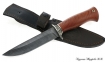
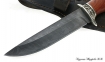
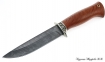
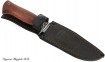
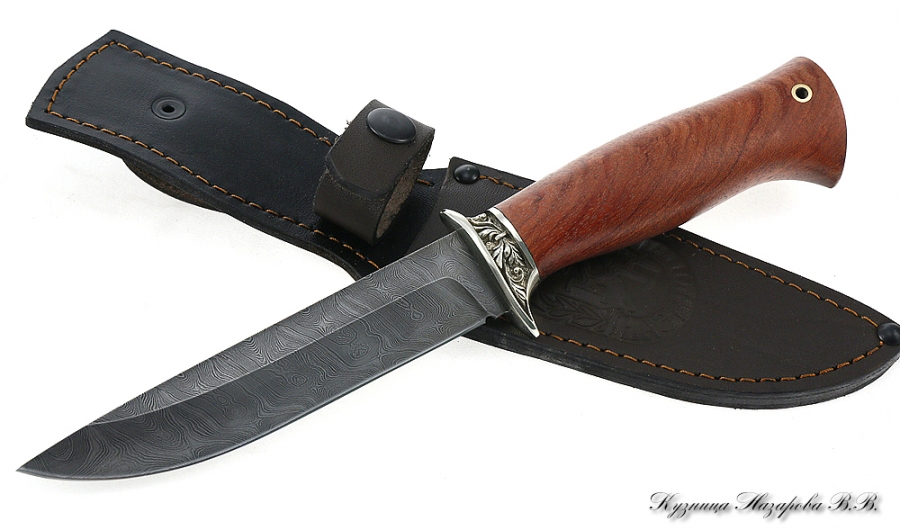
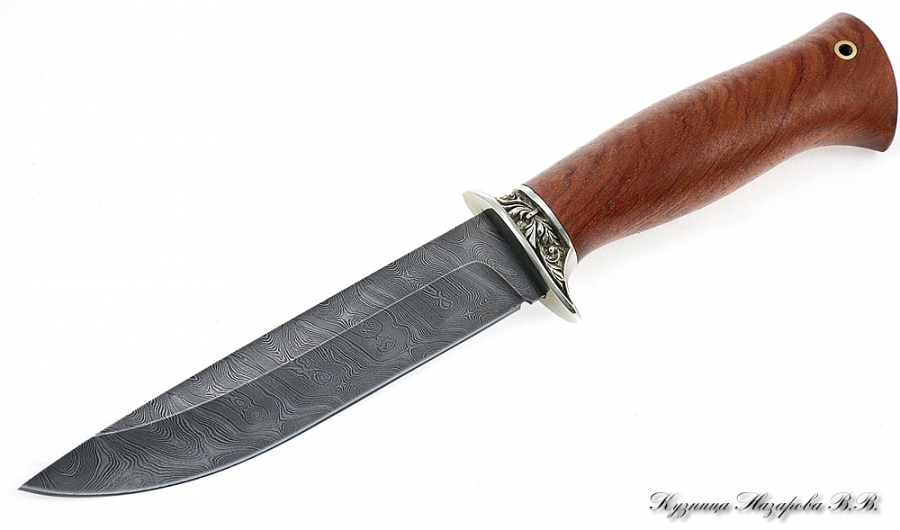
Knife Infantryman Damascus Melchior bubinga
Knife Infantryman Damascus Melchior bubinga
- Blade steel tipeDamascus
- Материал рукоятиБубинга
- Декор рукоятиМельхиор
- Lengtn blade (os)135 mm
- Witdth blade (os)26 mm
- Толщина клинка2.4 mm
- Lengtn handle (os) 120 mm
- Hardness (HRC)62
- Product weight, gram200
- SheathLeather
- КонструкцияФиксированные
- ОсобенностиС гардой
- Форма клинкаNormal Blade
Detailed analysis of the properties and features of the knife
Blade steel: Damascus steel (HRC 62)
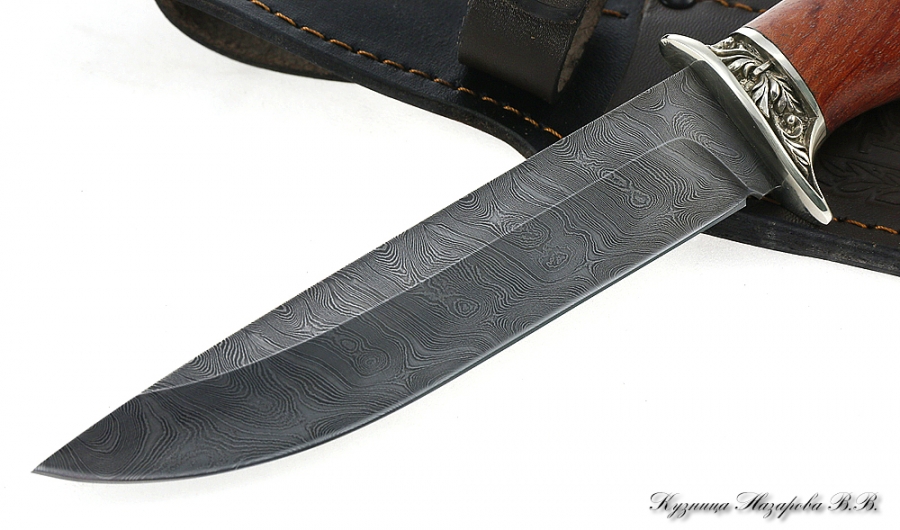
The blade is made of Damascus steel with a hardness of 62 HRC, which is one of the highest values in the knife world. Due to this, the blade has outstanding wear resistance, retains its sharpness for a long time and is resistant to jams even during intensive use. The Damascus is not only functional, but also visually unique, each wave on the blade is the result of the artistic work of a blacksmith.
Blade shape and parameters (Normal Blade, 135x26x2.4 mm)
The Normal Blade blade is a versatile solution suitable for both precision work and confident cutting. The length of 135 mm and width of 26 mm allow you to use the knife in a variety of scenarios: from working with wood and products to performing field tasks.
Handle material: bubinga, nickel silver
The handle is made of valuable bubinga wood, characterized by high strength and resistance to moisture, as well as nickel silver, a noble alloy with anticorrosive properties. This combination of materials not only ensures durability and stylish appearance, but also makes the handle pleasant to the touch even with wet hands. Due to the presence of a guard, the handle is securely fixed in the hand, ensuring safety during operation.
Resistance to moisture and corrosion
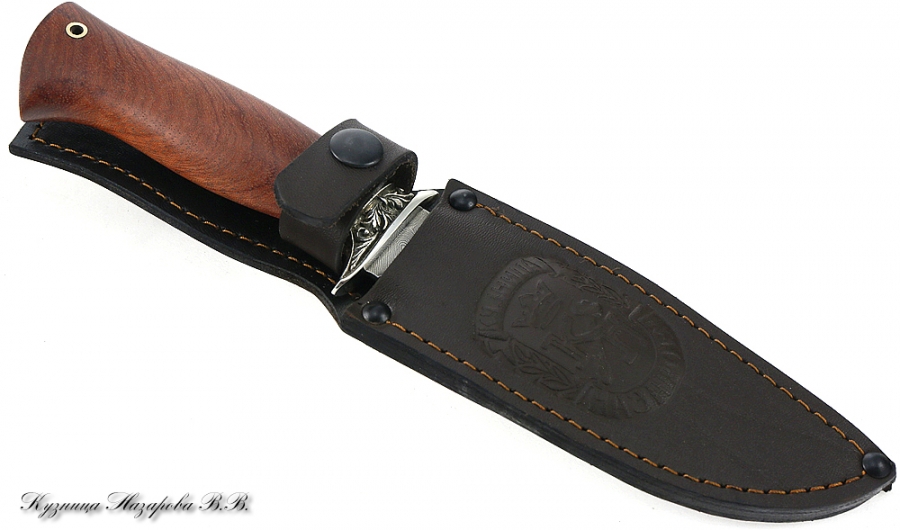
Damascus steel requires a little more maintenance than modern stainless alloys: after use, it is recommended to wipe the blade dry. However, nickel silver and bubinga are resistant to moisture, which increases the durability of the handle. The set includes a leather scabbard that provides additional protection.
Durability, ease of maintenance and care
Due to its high hardness, the knife keeps sharpening for an extremely long time, which reduces the need for regular straightening. When blunting, standard sharpening is suitable, but to preserve the Damascus pattern, it is recommended to use high-quality abrasives and avoid significant damage to the edge.
Design and technology features
The knife is hand-assembled, taking into account the best traditions of blacksmithing. The use of rare materials and handmade make each piece unique. This combination of properties is appreciated by collectors and lovers of traditional knife art.
Scope of application: strengths and limitations
Optimal tasks and conditions:
— Tourism, hunting, fishing: the knife will perform well when preparing food, cutting small and medium game, and doing preparatory work in nature.
— Household tasks: confidently copes with cutting products, linear woodwork.
— Collectibles: due to the beauty of the damask and the sophistication of the handle, the product will become a worthy example in the collection of connoisseurs of weapon aesthetics.
— As a gift: the presentable appearance and unique materials make the knife a status gift.
Restrictions:
— It is not intended for heavy work involving forceful chopping (for example, chopping bones, wood chips or working with hard metals).
— It is not recommended for use in conditions of high humidity without subsequent maintenance of the blade, due to the need to preserve the Damascus pattern from corrosion.
— It is not suitable for work where excessive “roughness” is required and the artistic layer is at risk of damage.
Unique features and advantages
- High hardness and sharpening resistance due to Damascus steel (HRC 62).
- Elegant appearance: unique blade pattern and noble handle.
- Reliable ergonomics: stable grip in the hand even in a humid environment, thanks to the shape of the handle, the guard and the features of the bubing wood.
- Practical and wear-resistant handle materials (bubinga + nickel silver).
- Handmade — each knife is unique.
Care recommendations
- Wipe the blade dry after use, avoid prolonged exposure to a humid environment.
- Treat the blade 1-2 times a month with a thin layer of neutral oil to prevent corrosion.
- Keep the handle dry, wipe with a soft cloth if necessary.
- Sharpening should be done with mild abrasives so as not to damage the Damascus pattern.
Conclusion and brief recommendation
This model is an ideal choice for connoisseurs of traditional technologies, hunters, fishermen and tourists, as well as collectors focused on aesthetics, quality of materials and handwork. For everyday use and as a gift, the knife deservedly stands out for its combination of practicality and respectability. If you are looking for a tool for heavy construction or extreme work, you should pay attention to other, less artistic and more specialized models.